Walking Table

Description
When I first saw the Carpentopod project I knew that I would like to build something similar. So the project started and I built a walking table.
Project summary
I designed and built a 6 leg robot that has a table form. Most parts are 3d printed and the modular design is utilized. The project's main challenge was the mechanical design and keeping the costs down.
My responsibilities
CAD design
3d printing and build up
DC motor selection and control
Programming and testing
Results
The original project author was kind enough to share the mechanical design of the leg. It took me some time to fully understand the concept and develop a redesign based on it. Since my 3D printer has limited build volume, the leg design ultimately dictated the overall size of the table. Because the dimensions were already quite compact, I decided to omit the bearings.
It took several iterations to achieve the right fit: loose enough to move freely, yet tight enough to avoid excessive wobble. Once the mechanical assembly was complete, I used Claude to create a simple browser-based application for remote control of the table. Through multiple revisions, I gradually refined and improved the control interface.
The first motors I selected turned out to be slightly underpowered, so I replaced them with slower but more powerful alternatives. To power the entire system, I used a standard USB-C power bank, which made operation simple, safe, and convenient.
Overall, the table works reasonably well and demonstrates the core concept. The absence of bearings is noticeable, particularly because of the squeaking noise during operation. Rotational movement is not as smooth as intended, and a larger turning radius would likely improve performance. At present, certain components can bend under load and jam, preventing movement altogether. Adding bearings and reinforcing the joints would further enhance the user experience.
In addition, the table is somewhat low and smaller than ideal for practical use. Despite these limitations, it serves as a successful proof of concept. While it is not yet a fully practical device, it demonstrates that the concept is viable and provides a solid foundation for future improvements.
Used tools
SW: Arduino IDE, Fusion 360, Claude AI
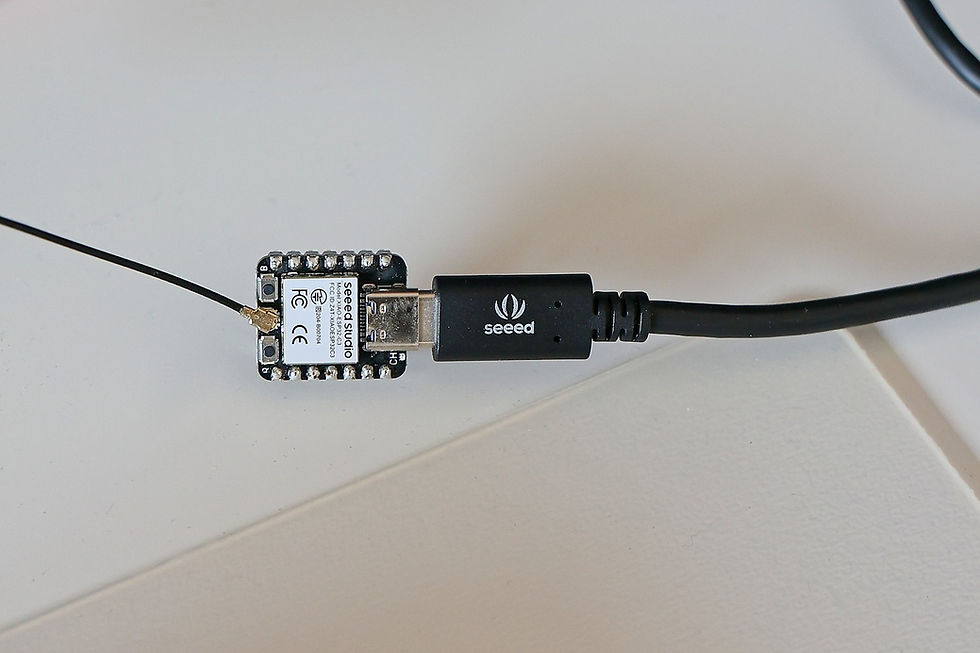
HW: 3d printer, soldering, ESP32, DC motors, H-bridge



Comments